Confused about whether to write canceled or cancelled? You’re not alone.
Many people search for this keyword because English has tricky spelling rules, especially between British and American English.
Choosing the wrong version can feel embarrassing in emails, social media posts, or formal documents.
This article clears the confusion. You’ll get a quick answer, learn the origin of the word, understand the difference between British and American English, and find out which spelling to use in different contexts.
We’ll also cover common mistakes, real-life examples, and even Google Trends data to see which version is more popular worldwide.
By the end, you’ll confidently know when to use “canceled” vs “cancelled” and avoid any spelling mistakes.
Canceled or Cancelled – Quick Answer
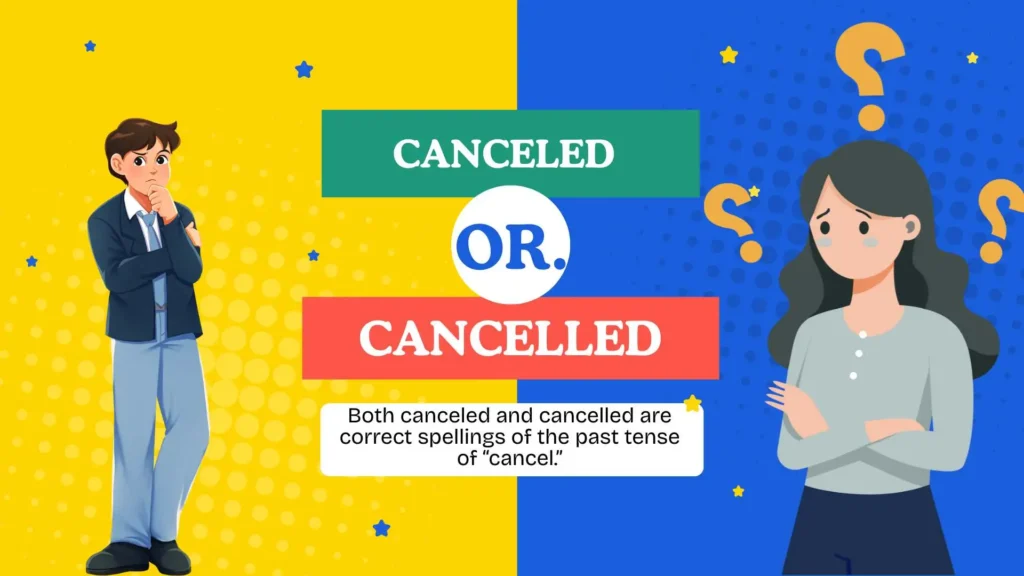
Both canceled and cancelled are correct spellings of the past tense of “cancel.”
- Canceled → American English standard
- Cancelled → British English standard
Examples:
- The flight was canceled due to bad weather. (US)
- The event was cancelled last minute. (UK)
Use the version that matches your audience.
Canceled or Cancelled in Other Context
Canceled or Cancelled Reddit
On Reddit, users often debate the correct spelling of “canceled” vs “cancelled.” The short answer? Both are correct — it depends on the region.
- Canceled is American English.
- Cancelled is British English.
Reddit discussions usually conclude that neither is wrong; consistency matters more than the spelling itself. If you’re writing for a U.S. audience, stick with canceled. For UK, Canada, or Australia, use cancelled.
Canceled or Cancelled Meaning
Both words mean the same thing:
To decide that something planned will not happen.
It can refer to events, subscriptions, flights, meetings, or even social rejection in pop culture (“being canceled”). The only difference is spelling — not meaning.
Canceled or Cancelled AP Style
According to AP Style (Associated Press Stylebook):
✔ Use canceled (one “L”)
✔ Use canceling (one “L”)
AP Style follows American English spelling rules. So if you’re writing news articles, blogs targeting U.S. readers, or professional media content, use canceled.
Canceled or Cancelled Synonym
Here are strong synonyms depending on context:
For events or plans:
- Called off
- Postponed
- Abandoned
- Scrapped
- Terminated
For subscriptions/services:
- Discontinued
- Ended
- Revoked
- Withdrawn
For social/media context:
- Boycotted
- Criticized
- Deplatformed
Canceled or Cancelled in a Sentence
American English:
- The concert was canceled due to heavy rain.
- She canceled her gym membership.
British English:
- The match was cancelled because of bad weather.
- He cancelled his travel plans.
Both are correct — just match your audience.
Canceled or Cancelled Taylor Swift
When people search this, they usually mean one of two things:
- Was a Taylor Swift concert canceled?
- Was Taylor Swift “canceled” online?
In media reporting (especially U.S.-based), it’s written as:
- “Taylor Swift’s show was canceled.”
In UK publications, it may appear as:
- “Taylor Swift’s show was cancelled.”
The spelling depends on the publication’s language style — not the situation itself.
Canceled or Cancelled Examples
Events:
- The flight was canceled due to fog.
- The festival was cancelled after safety concerns.
Meetings:
- I canceled our appointment.
- They cancelled the board meeting.
Subscriptions:
- She canceled Netflix.
- He cancelled his insurance policy.
Informal/social usage:
- The influencer was “canceled” after the controversy.
Canceled Appointment
A canceled appointment means a scheduled meeting that will no longer take place.
Common examples:
- The doctor’s appointment was canceled.
- I had to cancel my dentist appointment.
- Your interview has been canceled until further notice.
Professional tip:
In business writing (U.S.), always use canceled appointment (single L).
The Origin of Canceled/Cancelled
The word “cancel” comes from Latin cancellare, meaning “to cross out.” Over centuries, English simplified the past tense:
- British English often doubles the consonant before adding -ed, leading to cancelled.
- American English tends to keep it simple: canceled.
Both forms have been used since the 1800s, but modern style guides in each region prefer one spelling over the other.
British English vs American English Spelling
Spelling differences are common in English. Here’s how it works for “canceled/cancelled”:
| Feature | American English | British English |
| Past tense | canceled | cancelled |
| Present participle | canceling | cancelling |
| Style guide reference | AP, Chicago | Oxford, Cambridge |
| Example sentence | The show was canceled. | The show was cancelled. |
Tip: British English doubles the consonant if the last syllable is stressed, while American English generally does not.
Which Spelling Should You Use?
- United States → Use canceled
- United Kingdom & Commonwealth countries → Use cancelled
- Global or international audiences → Either works, but consistency is key
If you are writing for an American company or website, stick with canceled. For UK readers or formal documents in British English, use cancelled.
Common Mistakes with Canceled/Cancelled
- Using canceled in British English documents (may look wrong)
- Using cancelled in American English content (may trigger spellcheck)
- Forgetting the double l in cancelling/cancelled (common error)
- Confusing it with similar words like censor/censured
Correct usage tips: Always check your audience, and maintain the same spelling throughout a text.
Canceled/Cancelled in Everyday Examples
Emails:
- “Your subscription has been canceled/cancelled.”
News headlines:
- “Concert canceled/cancelled after heavy rain.”
Social media:
- “Plans for tonight are canceled/cancelled 😢”
Formal writing:
- “The contract was canceled/cancelled in accordance with company policy.”
Canceled/Cancelled – Google Trends & Usage Data
Search data shows:
- Canceled → Most popular in the US, Canada, and some international sites
- Cancelled → Dominates in the UK, Australia, New Zealand, and Commonwealth countries
Insight: The spelling often reflects the reader’s location. Content creators should adjust to match their audience to improve engagement.
Keyword Variations Comparison Table
| Spelling | Region | Example | Usage Notes |
| canceled | US | Flight canceled | Standard in American English |
| cancelled | UK | Flight cancelled | Standard in British English |
| canceling | US | Movie canceling | Present participle, US style |
| cancelling | UK | Movie cancelling | Present participle, UK style |
FAQs About Canceled or Cancelled
- Is canceled or cancelled correct?
Both are correct; use canceled for US and cancelled for UK. - Why are there two spellings?
British English doubles the consonant; American English simplifies spelling. - Which is better for emails?
Match your audience. US → canceled, UK → cancelled. - Does spelling affect SEO?
Yes, use the spelling your target audience searches for. - What about “canceling” vs “cancelling”?
Same rule: single l for US, double l for UK. - Can I mix both spellings in one text?
No. Always be consistent. - Is one version more modern?
Both are modern; American English favors canceled, British English favors cancelled.
Conclusion
The confusion between canceled and cancelled comes from regional spelling differences in English. American English simplifies it to cancel, while British English doubles the consonant: cancelled.
Always consider your audience and maintain consistent spelling throughout your writing. Whether you are drafting emails, publishing news, or creating social media posts, using the correct version enhances professionalism and readability.
Remember, canceled is for US readers, cancelled is for UK and Commonwealth audiences, and either is acceptable for international use as long as it is consistent.
By understanding these rules and checking your context, you can confidently use this word without errors and avoid common mistakes.

Olivia Brown
Hi, I’m Olivia Brown, a passionate writer and grammar enthusiast who loves helping people master the art of language. Ever since I was a child, words have fascinated me, and I find joy in exploring the rules and nuances of English. Through my writing, I aim to make grammar simple, fun, and accessible for everyone. I enjoy sharing tips, tricks, and creative exercises that help learners feel confident in their writing. When I’m not writing, you’ll find me reading, traveling, or experimenting with new ways to teach language. Grammar isn’t just my profession—it’s my passion, and I love inspiring others to love it too.
Books:
-
Grammar Made Easy
-
Mastering English Rules