Cancelled vs. canceled is one of the most confusing spelling rules in English grammar.
I often see writers stop mid-sentence because they’re unsure which spelling to choose.
Is cancelled incorrect, or is canceled the wrong one?
In this article, I’ll explain the exact rule in a simple way so I can help you use the correct spelling with confidence.
What Do “Cancelled” and “Canceled” Mean?
Before learning the rule, let’s understand the meaning.
Both cancelled and canceled come from the verb cancel.
Cancel means:
- To decide that something will not happen
- To stop an event, plan, or action
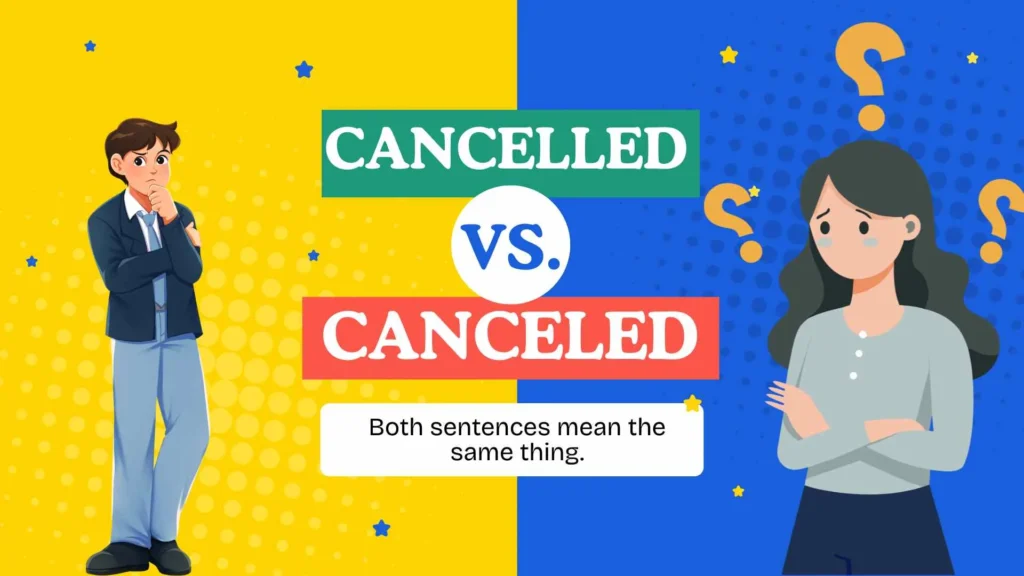
There is no difference in meaning between the two spellings.
Example:
- The meeting was canceled.
- The meeting was cancelled.
Both sentences mean the same thing.
The Core Grammar Rule
The difference between cancelled and canceled depends on regional English rules, not grammar mistakes.
The main rule is:
American English uses one “L”
British English uses two “L’s”
That’s the foundation of this entire topic.
Canceled – American English Rule
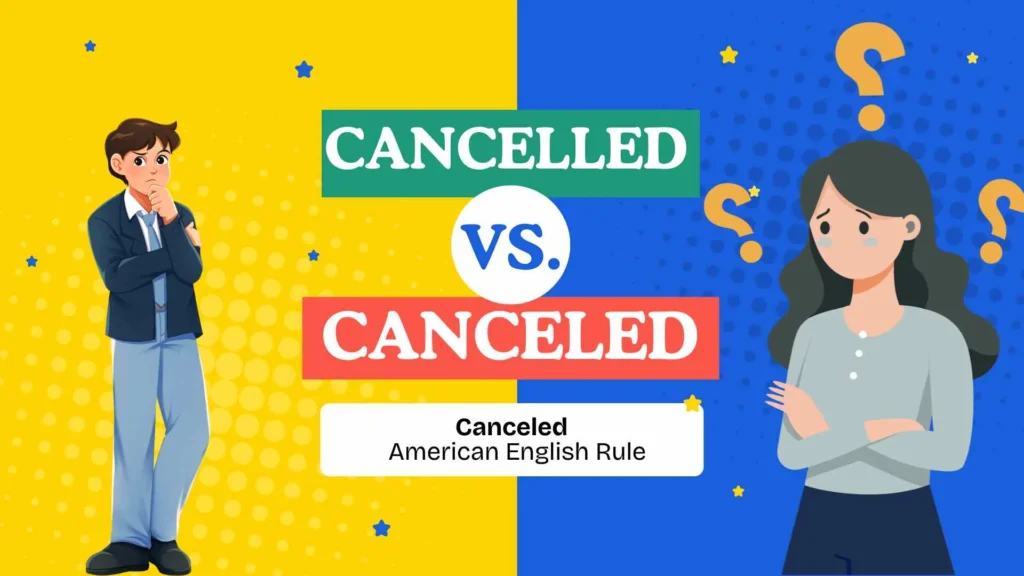
In American English, the spelling is:
👉 canceled (with one L)
Why?
American English usually does not double the final “L” when adding:
- -ed
- -ing
Examples:
- The flight was canceled.
- My order got canceled yesterday.
- She is canceling her appointment.
If your content follows US English, this spelling is correct.
Cancelled – British English Rule
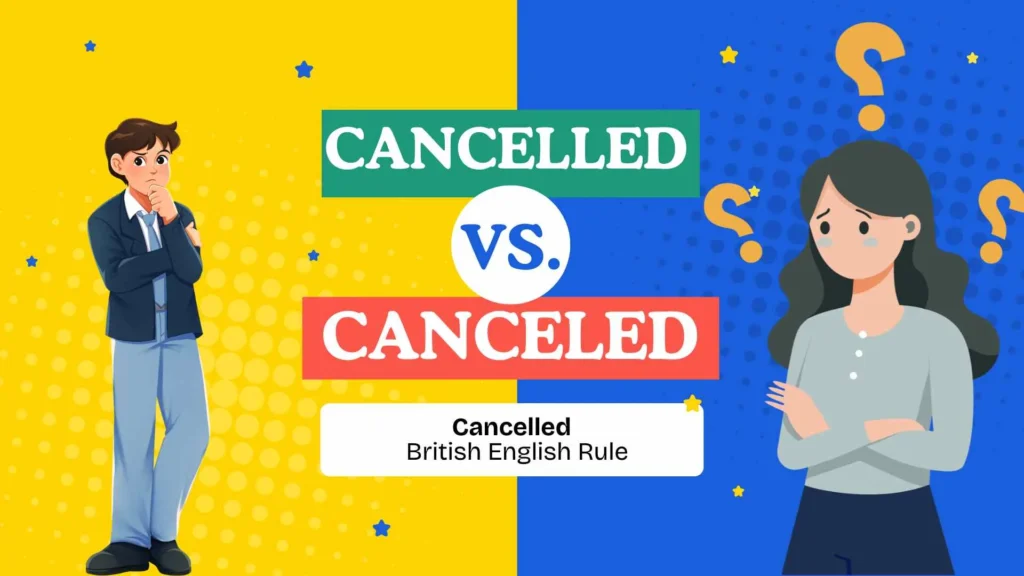
In British English, the spelling is:
👉 cancelled (with two L’s)
Why?
British English doubles the final “L” before adding:
- -ed
- -ing
Examples:
- The flight was cancelled.
- The event has been cancelled.
- He is cancelling the booking.
If your website follows UK English, this is the correct spelling.
Why English Has Two Different Spellings
English evolved differently in various regions.
- British English kept traditional spelling rules
- American English simplified many spellings
That’s why we have differences like:
- colour vs color
- travelled vs traveled
- cancelled vs canceled
Neither is wrong. They just follow different standards.
Verb Stress Rule (Extra Understanding)
The verb cancel has stress on the first syllable:
CAN-cel
British English:
- Doubles the L even if stress is on the first syllable
✔ cancelled
✔ cancelling
American English:
- Does not double the L when stress is not on the last syllable
✔ canceled
✔ canceling
This rule applies to many similar words.
All Forms Compared (Side-by-Side)
| Form | American English | British English |
| Base verb | cancel | cancel |
| Past tense | canceled | cancelled |
| Past participle | canceled | cancelled |
| Present participle | canceling | cancelling |
| Noun | cancellation | cancellation |
✔ Notice: “Cancellation” is the same everywhere
Common Mistakes Learners Make
❌ Writing cancellled (three L’s)
❌ Mixing canceled and cancelled in the same article
❌ Thinking one spelling is wrong
❌ Correcting someone unnecessarily
The real mistake is inconsistency, not spelling choice.
Which Spelling Should You Use?
Choose one English style and stick to it.
Use canceled if:
- Your audience is American
- Your site follows US English
- You target US search traffic
Use cancelled if:
- Your audience is British or international
- Your site is grammar-focused
- You follow UK English standards
👉 Consistency matters more than the spelling itself.
Similar Words with the Same Rule
This rule also applies to many other verbs ending in L.
| American English | British English |
| traveled | travelled |
| traveling | travelling |
| labeled | labelled |
| labeling | labelling |
| modeled | modelled |
Learning this pattern helps you avoid future confusion.
Conclusion
Both cancelled and canceled are grammatically correct spellings of the same word.
The only difference is regional usage American English prefers canceled, while British English uses cancelled.
I recommend choosing one spelling style and using it consistently across your content.
Once you understand this rule, you’ll never hesitate again while writing.

Olivia Brown
Hi, I’m Olivia Brown, a passionate writer and grammar enthusiast who loves helping people master the art of language. Ever since I was a child, words have fascinated me, and I find joy in exploring the rules and nuances of English. Through my writing, I aim to make grammar simple, fun, and accessible for everyone. I enjoy sharing tips, tricks, and creative exercises that help learners feel confident in their writing. When I’m not writing, you’ll find me reading, traveling, or experimenting with new ways to teach language. Grammar isn’t just my profession—it’s my passion, and I love inspiring others to love it too.
Books:
-
Grammar Made Easy
-
Mastering English Rules