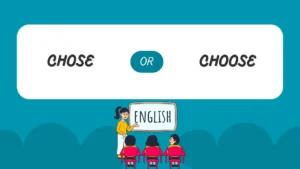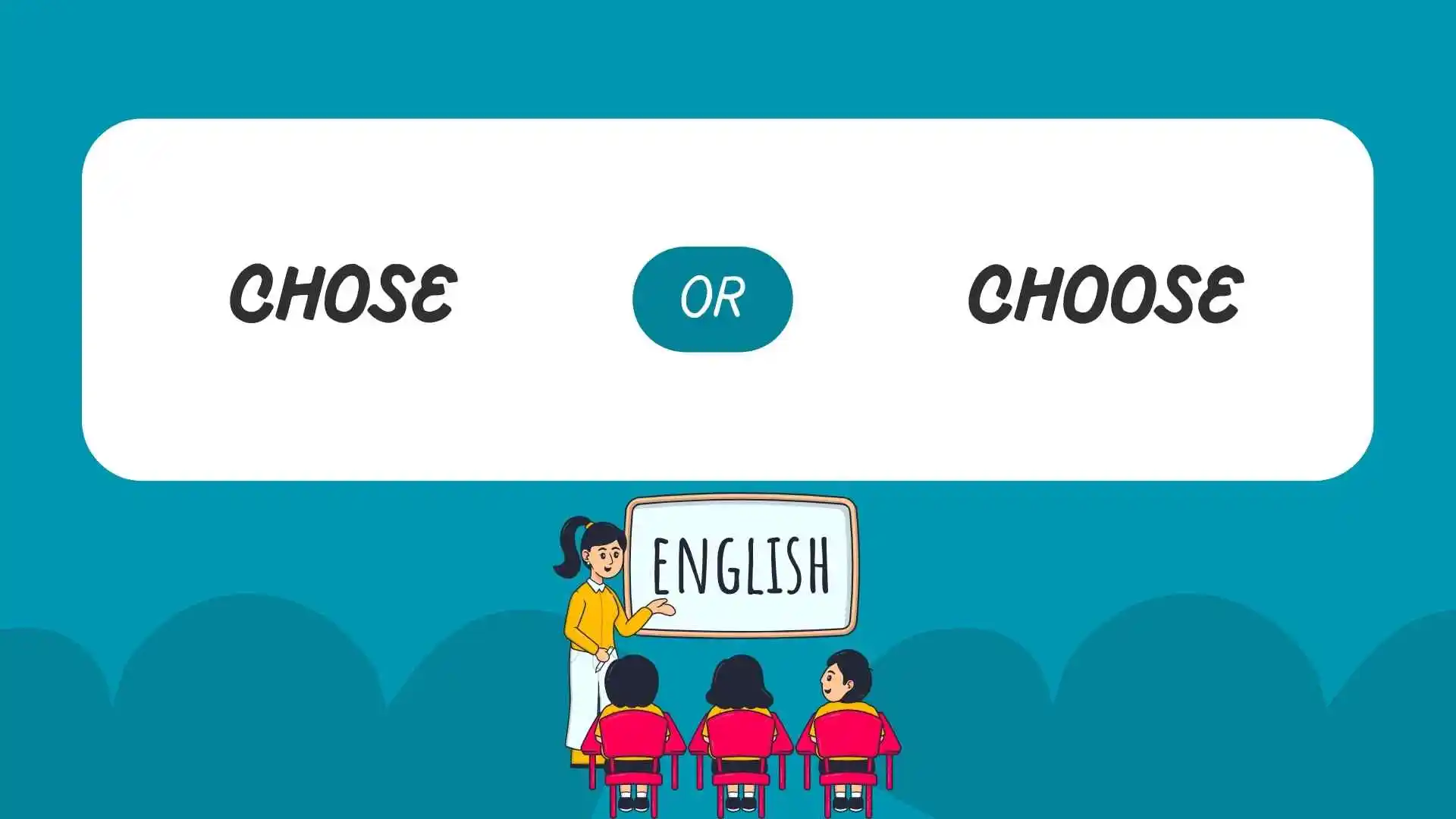
Chose or choose — which one should you use?Many people mix up these two words because they look and sound almost the same.
The good news is simple: both are correct, but they are used in different tenses.
In this complete guide, you’ll learn the clear difference, easy memory tricks, example sentences, common mistakes, and FAQs — so you never get confused again.
Which One Is Correct – Chose or Choose?
Both words are correct.
However, they are used at different times.
- Choose is the present tense.
- Chose is the past tense.
So if you are talking about something happening now or in the future, use choose.
If you are talking about something that already happened, use chose.
Quick Answer for Featured Snippet:
- Use choose for present or future.
- Use chose for past.
Example:
- I choose coffee every morning.
- Yesterday, I chose tea.
The only difference is the time.
Meaning of “Choose”
Choose means to pick, select, or decide between two or more options.
It is the base form of the verb.
We use it in the present tense and future tense.
Simple Definition:
To select something from different options.
When We Use “Choose”:
- Present tense
- Future tense
- After modal verbs (can, will, should, must)
- In commands
Example Sentences:
- I choose healthy food every day.
- Please choose your favorite color.
- You can choose any seat in the room.
- They choose honesty over lies.
- We will choose a winner tomorrow.
Notice how all of these talk about now or later.
Meaning of “Chose”
Chose is the past tense of choose.
It means you already made a decision.
Simple Definition:
Selected or decided in the past.
When We Use “Chose”:
- Past tense only
- To describe a finished decision
Example Sentences:
- I chose the blue dress yesterday.
- She chose to stay at home.
- They chose a new manager last week.
- We chose the cheapest option.
- He chose honesty over money.
If the action already happened, use chose.
Why Do People Confuse Chose and Choose?
Many learners mix them up for three main reasons.
1. Spelling Similarity
The words look almost the same.
The only difference is one extra “o” in choose.
- Choose = double “o”
- Chose = single “o”
That tiny letter changes the tense.
2. Pronunciation
They sound very similar.
Choose = /chooz/
Chose = /chohz/
The vowel sound changes slightly, but it’s easy to miss.
3. Fast Typing Mistakes
People often type quickly and forget the extra “o.”
Autocorrect can also cause errors.
Because both words are real English words, spellcheck does not always catch the mistake.
Just Chose or Just Choose – Is It Correct?
This is a very common question.
The correct choice depends on time.
“Just chose” — Correct for past
Use it when something already happened.
Example:
- I just chose my classes.
- She just chose her answer.
“Just choose” — Correct for command
Use it when telling someone to decide.
Example:
- Just choose one!
- Don’t think too much. Just choose.
If you’re giving an instruction, use choose.
If you’re talking about something that already happened, use chose.
Easy Trick to Remember the Difference
Here’s a simple memory trick:
The Extra “O” Trick
- Choose has two “O” letters.
- Think of the two O’s as two options.
- When you are choosing between options now, use choose.
For past tense:
- Chose has one “O.”
- Think of it as one finished decision.
- The choice is already done.
Another trick:
If you can replace the word with “select,” use choose.
If you can replace it with “selected,” use chose.
Example:
- I select pizza. → I choose pizza.
- I selected pizza. → I chose pizza.
Simple and clear.
Related Phrases with “Choose”
Now let’s look at some related expressions that people often see in English.
Choose Between
Means to decide between two or more options.
Example:
- I must choose between coffee and tea.
Choose From
Used when selecting from a list.
Example:
- You can choose from 10 different flavors.
Choose Wisely
Means make a smart decision.
Example:
- Choose wisely before signing the contract.
In That Case
This phrase means “if that is true.”
Example:
- If you are tired, in that case, you should rest.
In Any Case
Means “no matter what.”
Example:
- In any case, we will support you.
In No Case
Means “never” or “under no condition.”
Example:
- In no case should you share your password.
These phrases often appear in formal writing.
Common Misspellings
Here are common grammar mistakes people make.
| Correct | Incorrect |
| Choose | Chosse |
| Chose | Choosed |
| Choose | Chuse |
| Chose | Choze |
| Choose | Choise |
| Separate | Seperate |
| Definitely | Definately |
| Receive | Recieve |
| Necessary | Neccessary |
| Occasion | Ocassion |
| Until | Untill |
| Tomorrow | Tommorow |
| Writing | Writting |
| Grammar | Grammer |
| Believe | Beleive |
Many of these errors happen because of pronunciation confusion.
Frequently Asked Questions
Is “choosed” ever correct?
No.
“Choosed” is not a real English word.
The correct past tense of choose is chose.
Is it choose or chose yesterday?
Use chose.
Because yesterday is past tense.
Correct:
- I chose pizza yesterday.
Can I use choose in formal writing?
Yes.
Both choose and chose are correct in formal and informal writing.
Just use the correct tense.
Is choose present tense?
Yes.
Choose is the present tense form.
Example:
- I choose happiness.
What is the past participle of choose?
The past participle is chosen.
Example:
- I have chosen my answer.
This is different from chose.
Why does English have irregular verbs like chose?
Choose is an irregular verb.
That means it does not follow the normal “-ed” rule.
Instead of “choosed,” it becomes chose.
English has many irregular verbs like:
- Go → went
- Take → took
- See → saw
You must memorize them.
Deep Grammar Explanation (For Better Understanding)
Choose is an irregular verb.
Here are its forms:
- Base form: choose
- Past tense: chose
- Past participle: chosen
- Present participle: choosing
Example sentences:
- I choose wisely.
- I chose wisely.
- I have chosen wisely.
- I am choosing wisely.
Notice how the verb changes based on tense.
This is why context is important.
Always check the time in your sentence.
Real-Life Comparison Examples
Let’s compare similar sentences:
Present:
- I choose this option every time.
Past:
- I chose this option yesterday.
Future:
- I will choose this option.
Present Perfect:
- I have chosen this option.
Understanding time makes everything easier.
Common Sentence Corrections
Wrong: I choose this yesterday.
Correct: I chose this yesterday.
Wrong: She choosed the red one.
Correct: She chose the red one.
Wrong: He just choose it.
Correct: He just chose it.
Wrong: Please chose one.
Correct: Please choose one.
When you practice correcting mistakes, you improve faster.
Final Quick Summary
Here’s the simple rule again:
- Choose = present or future
- Chose = past
If the action already happened, use chose.
If it is happening now or will happen, use choose.
Both words are correct — but only in the right tense.
Master this small grammar rule, and your English will instantly sound more natural and professional.
Conclusion
Understanding the difference between chose or choose is easier than it looks. The only real difference is time. Use choose for present or future decisions, and use chose for past decisions. Avoid common spelling mistakes like “choosed,” and remember the simple “extra O” trick to keep it clear in your mind. Once you understand tense, you’ll never confuse these two words again.

Michael Reed is a passionate language enthusiast who has spent over a decade exploring the nuances of English grammar. Writing has always been his way of sharing knowledge, simplifying complex rules, and helping readers express themselves clearly. He believes that good grammar is the bridge between ideas and understanding, making communication powerful and precise. When he isn’t writing, Michael enjoys reading classic literature, experimenting with creative writing, and mentoring young writers. His goal is to make grammar accessible, enjoyable, and practical for everyone. Michael’s dedication to language learning has inspired thousands to embrace the beauty of words every day.
Books by Michael Reed:
-
Mastering Grammar Made Simple
-
The Essential Guide to English Writing