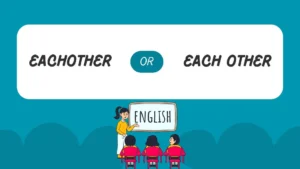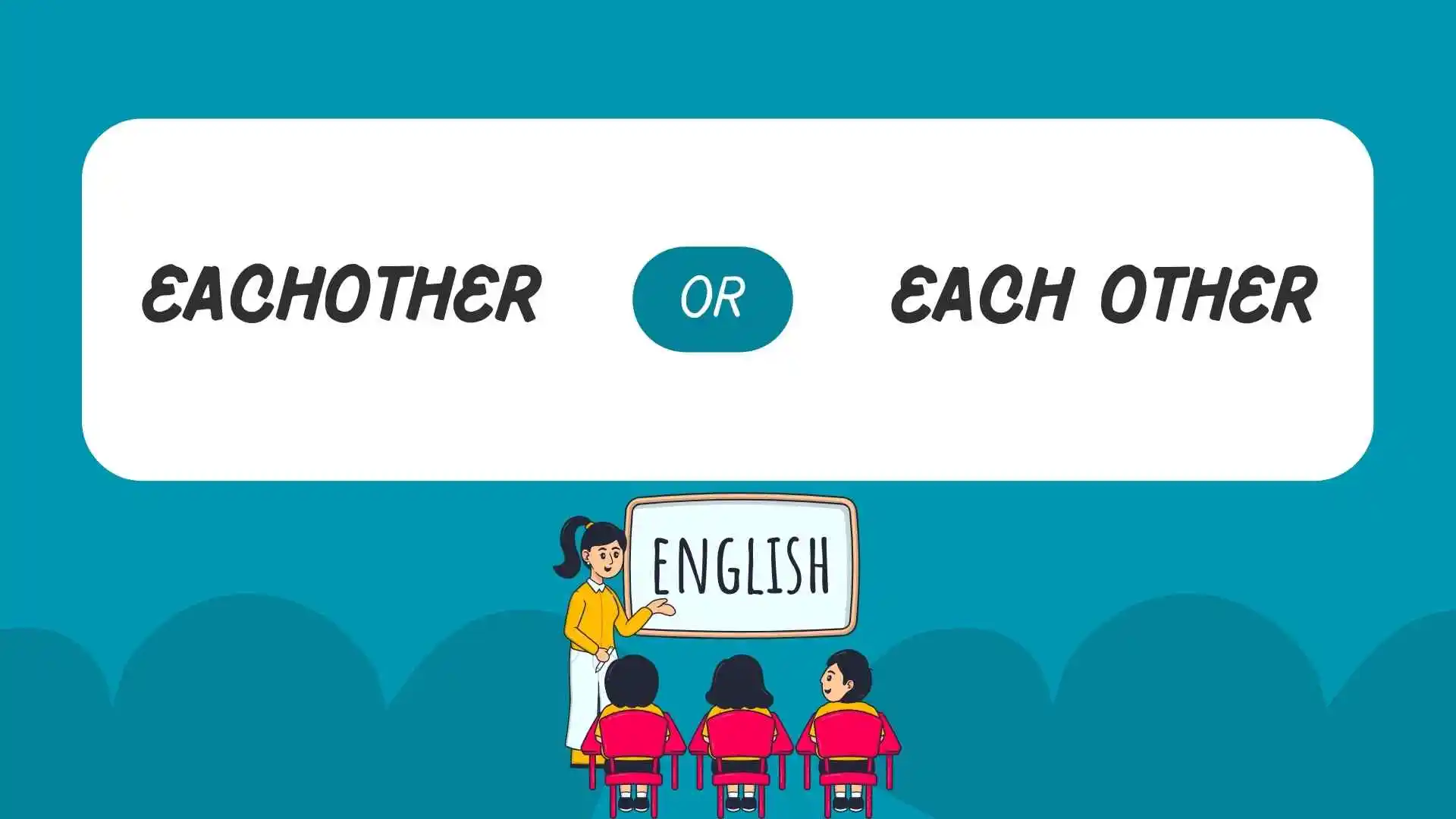
Eachother or each other — which one is correct?If you have ever paused while writing and wondered whether to use “eachother” or “each other,” you are not alone.
Many people get confused because the words sound like one single word when spoken.Here is the clear answer: “each other” is correct, and “eachother” is always wrong.
In this detailed guide, you will learn the correct spelling, meaning, examples, memory tricks, common mistakes, and answers to frequently asked questions.
Which One Is Correct – Eachother or Each Other?
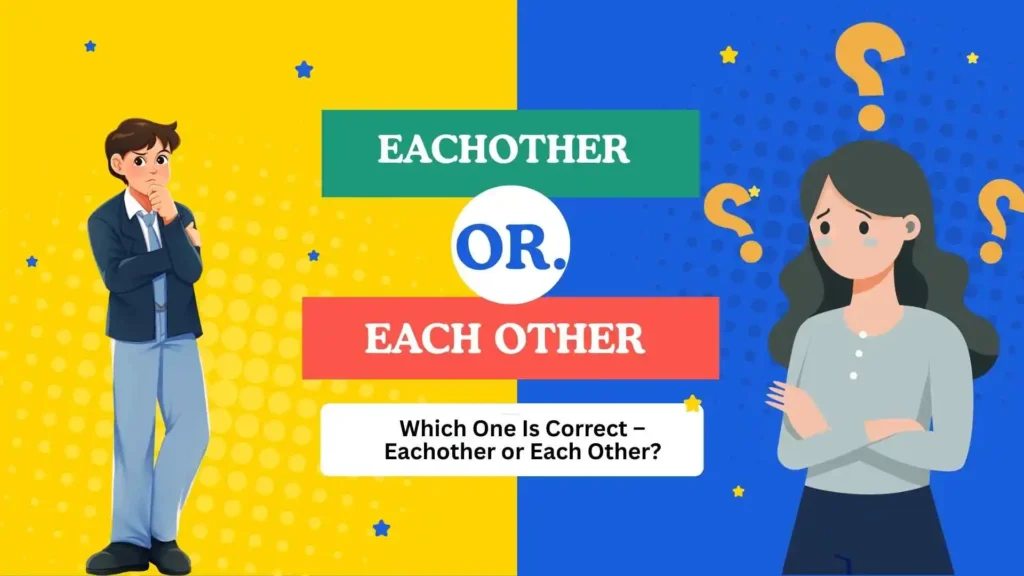
The correct form is: each other ✅
The incorrect form is: eachother ❌
“Each other” is always written as two separate words.
It is a reciprocal pronoun. That means it shows that two or more people do something to one another.
“Eachother” is not a real English word. It does not appear in dictionaries. It is simply a spelling mistake.
So whenever you write it, always use two words.
Meaning of “Each Other”
Each other is a reciprocal pronoun.
It shows that two or more people or things perform the same action toward one another.
In simple words, it means “one another.”
We use it when actions go both ways.
Simple Explanation
If two friends hug, they hug each other.
If two teams compete, they compete against each other.
The action is shared.
Example Sentences
- • They love each other deeply.
- • The players congratulated each other after the match.
- • We should always help each other.
- • The twins often copy each other.
- • The neighbors greet each other every morning.
Notice how the action happens between two or more people.
Meaning of “Eachother” (If Applicable)
“Eachother” has no meaning in English.
It is not a correct word.
People write it by mistake because when we speak, “each other” sounds like one word.
However, in writing, it must always stay separated.
Incorrect Usage Examples
- • They love eachother. ❌
- • We support eachother. ❌
- • The teams respect eachother. ❌
- • Friends should trust eachother. ❌
- • They blamed eachother for the mistake. ❌
In all these examples, the correct spelling should be each other.
Why Do People Confuse Each Other and Eachother?
There are several reasons why people mix them up.
1. Spelling Similarity
Since “each” and “other” are often used together, many people think they form one word.
However, English keeps them separate.
2. Pronunciation
When spoken quickly, “each other” sounds like “ee-chother.”
Because of this smooth sound, people assume it is one word.
3. Common Typing Mistakes
Fast typing leads to joining the words together.
Autocorrect may also fail to fix it sometimes.
That is why it is important to remember the correct spelling rule.
Just Eachother – Is It Correct?
No, “just eachother” is not correct.
The correct phrase is:
Just each other ✅
Example:
- • We have just each other to rely on.
- • In the end, they had just each other.
Even when used in common expressions, the words remain separate.
Always check your writing carefully.
Easy Trick to Remember the Difference
Here is a simple memory tip:
If you can replace it with “one another,” then you must write each other as two words.
Example:
- They respect one another.
- They respect each other.
Both sentences mean the same thing.
Since “one another” has two words, “each other” must also have two words.
Another trick:
Think of “each” and “other” as two people standing side by side — not glued together.
That image will help you remember.
Related Phrases with “Each Other”
Here are some common phrases and how they work.
Each Other’s
This form shows possession.
Example:
- • They borrowed each other’s books.
- • The sisters share each other’s secrets.
The apostrophe comes after “other.”
Love Each Other
Example:
- • Couples should respect and love each other.
Help Each Other
Example:
- • Students should help each other in class.
Support Each Other
Example:
- • Good friends always support each other.
These phrases are common in daily English.
Common Misspellings (Table Format)
Below is a helpful table of commonly confused grammar words.
| Correct Form | Incorrect Form |
| each other | eachother |
| a lot | alot |
| no one | noone |
| in front | infront |
| all right | alright |
| every day | everyday (when meaning daily) |
| cannot | can not (in most cases) |
| altogether | all together (when meaning completely) |
| anyone | any one (when meaning any person) |
| into | in to |
| forever | for ever |
| maybe | may be (when used as adverb) |
| already | all ready |
| itself | it’s self |
| yourself | your self |
Learning these differences improves your writing skills quickly.
Frequently Asked Questions
Is “eachother” ever correct?
No. “Eachother” is never correct in English.
It is always a spelling mistake.
Is it one word or two?
It is always two words — each other.
Never combine them.
Can I use “each other” in formal writing?
Yes.
It is perfectly correct in academic, business, and formal writing.
What does “each other” mean?
It means two or more people do something mutually.
It shows a shared action.
Is “one another” different from “each other”?
They mean almost the same thing.
Traditionally, “each other” was used for two people and “one another” for more than two.
However, modern English uses them interchangeably.
Does “each other” always refer to people?
Mostly yes.
However, it can also refer to things.
Example:
- • The two magnets attract each other.
Deeper Grammar Insight: What Type of Word Is “Each Other”?
“Each other” is called a reciprocal pronoun.
English has only two reciprocal pronouns:
- • each other
- • one another
They show a mutual relationship.
For example:
- • The teammates respect each other.
Both teammates respect one another.
The action goes in both directions.
Grammar Rule: Placement in a Sentence
“Each other” usually comes after the verb.
Correct:
- • They trust each other.
It can also show possession:
- • They checked each other’s work.
Notice the apostrophe comes after “other.”
Common Sentence Mistakes and Fixes
Wrong:
- • They blamed eachother for the problem.
Correct:
- • They blamed each other for the problem.
Wrong:
- • We must understand eachother better.
Correct:
- • We must understand each other better.
Always separate the words.
Why Correct Spelling Matters
Correct spelling improves:
- • Writing clarity
- • Professional image
- • Academic performance
- • Search engine optimization (SEO)
Small grammar mistakes can reduce credibility.
Therefore, learning correct forms like each other makes your writing stronger.
Quick Summary for Featured Snippet
“Each other” is the correct spelling.
It is always written as two separate words.
“Eachother” is incorrect and not a real English word.
Use “each other” to show mutual action between two or more people.
Final Writing Practice Exercise
Fill in the blanks correctly:
- They hugged ____ after the ceremony.
- We should forgive ____ and move forward.
- The kids shared ____ toys.
- The rivals challenged ____ again.
Answers:
- each other
- each other
- each other’s
- each other
Practice helps you remember the rule permanently.
Conclusion
Eachother or each other — now you know the answer clearly. The correct form is each other, written as two separate words. “Eachother” is always incorrect. Use “each other” when describing mutual actions between two or more people. Remember the simple trick: if you can replace it with “one another,” keep it as two words. Correct spelling builds confidence, improves clarity, and makes your writing more professional.

Michael Reed is a passionate language enthusiast who has spent over a decade exploring the nuances of English grammar. Writing has always been his way of sharing knowledge, simplifying complex rules, and helping readers express themselves clearly. He believes that good grammar is the bridge between ideas and understanding, making communication powerful and precise. When he isn’t writing, Michael enjoys reading classic literature, experimenting with creative writing, and mentoring young writers. His goal is to make grammar accessible, enjoyable, and practical for everyone. Michael’s dedication to language learning has inspired thousands to embrace the beauty of words every day.
Books by Michael Reed:
-
Mastering Grammar Made Simple
-
The Essential Guide to English Writing