If you’ve ever watched the popular Australian kids’ show Bluey, you might have wondered: is Bluey a boy or a girl?
This question comes up a lot online, especially among parents, fans, and educators.
The confusion is understandable—Bluey is an adorable blue heeler puppy with a playful personality, and her name doesn’t immediately indicate gender to everyone.
People search for this keyword because they want clarity when talking to children, writing about the show, or using Bluey in educational materials.
Some parents also want to ensure that they are using the correct pronouns when referencing Bluey in conversations or social media.
This article will clear up the mystery, explain why the confusion exists, and provide a comprehensive guide on how to talk about Bluey accurately.
By the end, you’ll know not just is Bluey a boy or a girl, but also some fun facts, common mistakes, and how the show portrays gender through its characters.
Is Bluey a Boy or a Girl – Quick Answer
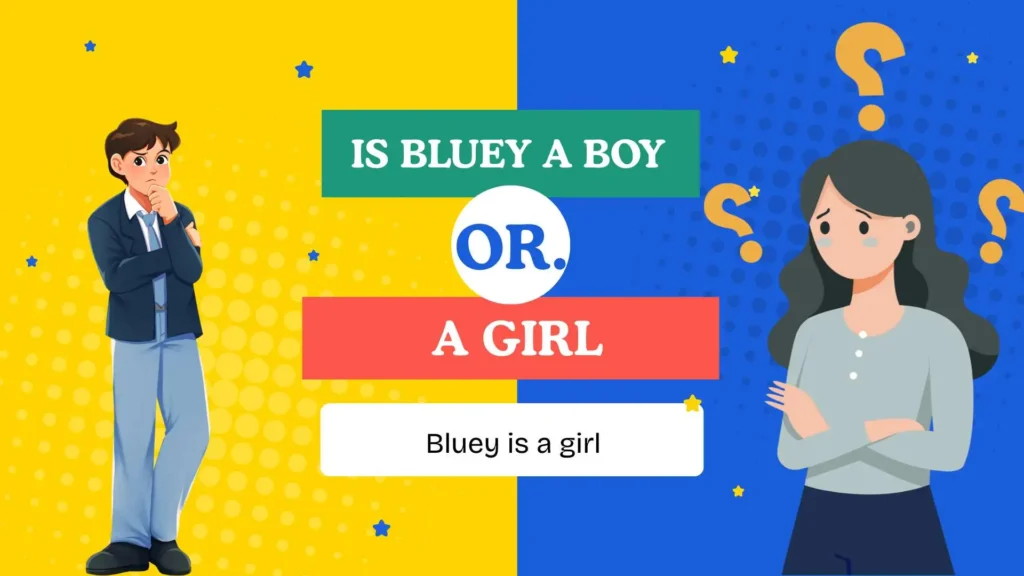
Quick Answer: Bluey is a girl.
She is a six-year-old female blue heeler puppy. The show features her family, including her dad Bandit, mom Chilli, and little sister Bingo. Examples in the show use feminine pronouns:
- Bluey loves playing pretend with her friends.
- Her mom and dad often join Bluey on adventures.
Despite some confusion due to her name or playful nature, Bluey is definitely a female character.
The Origin of “Bluey”
The name “Bluey” comes from Australian slang. In Australia, “Bluey” is often a nickname given to someone with red hair—or ironically, sometimes anyone with a distinctive feature. It’s a playful, friendly name rather than a gender-specific one.
The show’s creators chose “Bluey” because it’s catchy, memorable, and reflects the puppy’s blue coat.
The spelling and name have caused some confusion internationally because non-Australian audiences might not be familiar with the slang.
British English vs American English Spelling
Since Bluey is an Australian show, some people wonder if spelling or language differences affect how they refer to her. Here’s a quick comparison:
| Feature | British/Australian English | American English | Example Sentence |
| Colour | colour | color | Bluey is a blue-colored puppy. |
| Favourite | favourite | favorite | Bluey’s favorite game is pretend. |
| Behaviour | behaviour | behavior | Bluey shows great behaviour in school. |
Spelling differences don’t change the fact that Bluey is a girl, but they can affect how you write about the show in articles or schoolwork.
Which Spelling Should You Use?
- US audience: Use American spelling (color, favorite, behavior).
- UK/Commonwealth audience: Use British/Australian spelling (colour, favourite, behaviour).
- Global writing: Choose one style consistently.
Regardless of spelling, the key fact remains: Bluey is a female character.
Common Mistakes with “Is Bluey a Boy or a Girl”
- Referring to Bluey as a “he” – incorrect.
- Assuming Bluey is a boy because she’s energetic and adventurous.
- Confusing Bluey with her brother, who doesn’t exist—the show focuses on Bluey and her sister Bingo.
- Mispronouncing her name as “Blu-ee” instead of “Bluey.”
- Writing “Bluey is boy” without an article – it should be “Bluey is a girl.”
Correcting these mistakes ensures clarity when talking about the show.
“Is Bluey a Boy or a Girl” in Everyday Examples
Emails:
- Hi team, we are referencing Bluey in our kids’ educational newsletter. Bluey is a girl who loves adventures.
Social Media:
- Bluey is a girl! She’s the best example of imaginative play for kids.
News Articles:
- The Australian series Bluey follows a six-year-old girl who learns life lessons with her family.
Formal Writing:
- Bluey, a female blue heeler puppy, demonstrates positive behaviour and social skills in early childhood education.
Is Bluey a Boy or a Girl – Google Trends & Usage Data
Google searches show that interest in “is Bluey a boy or a girl” spikes whenever new episodes release, new merchandise launches, or parents discuss gender representation in children’s media. Most searches come from:
- Australia – origin of the show
- United States – popular among kids and parents
- UK – educational and streaming interest
The keyword remains popular because Bluey appeals to multiple generations, and users want clear, factual answers.
Keyword Variations Comparison Table
| Variation | Usage Example | Correct Answer |
| Is Bluey male or female | Is Bluey male or female in the show? | Female |
| Bluey gender | What is Bluey’s gender? | Female |
| Bluey boy or girl | Is Bluey a boy or girl? | Girl |
| Bluey pronouns | Which pronouns does Bluey use? | She/Her |
| Bluey character | Is Bluey a main character? | Yes, female |
FAQs
1. Why do people think Bluey might be a boy?
Because her name doesn’t explicitly indicate gender, and she is adventurous, which some assume is “boyish.”
2. Is Bingo a boy or a girl?
Bingo is Bluey’s younger sister, also a girl.
3. Who created Bluey?
Bluey was created by Joe Brumm, an Australian animator.
4. Can adults watch Bluey?
Yes, the show is family-friendly and has humor that appeals to adults.
5. Does Bluey have any brothers?
No, Bluey has only one sibling, Bingo.
6. Are there male characters in Bluey?
Yes, her dad Bandit and other male characters appear, but Bluey herself is female.
7. Where can I watch Bluey?
Bluey is available on Disney+, ABC Kids, and other streaming platforms.
Conclusion
In summary, the question “is Bluey a boy or a girl” has a simple answer: Bluey is a girl. She’s a six-year-old blue heeler puppy with a fun, adventurous personality. Misunderstandings often arise from her name, her energetic behaviour, or international audiences unfamiliar with Australian slang.
When writing or talking about Bluey, use feminine pronouns (she/her) and choose your spelling style depending on your audience—British/Australian or American English.
Remember that clarity and accuracy are essential, especially when sharing information with children or in educational content. Whether you’re referencing her in emails, news articles, or social media, knowing Bluey’s gender helps maintain proper context and respect for the show.

Olivia Brown
Hi, I’m Olivia Brown, a passionate writer and grammar enthusiast who loves helping people master the art of language. Ever since I was a child, words have fascinated me, and I find joy in exploring the rules and nuances of English. Through my writing, I aim to make grammar simple, fun, and accessible for everyone. I enjoy sharing tips, tricks, and creative exercises that help learners feel confident in their writing. When I’m not writing, you’ll find me reading, traveling, or experimenting with new ways to teach language. Grammar isn’t just my profession—it’s my passion, and I love inspiring others to love it too.
Books:
-
Grammar Made Easy
-
Mastering English Rules