“Search Google or Type a URL” is a common phrase that appears in your browser’s address bar when you open it.
Many users mistake it for an error or warning, but it is simply a helpful instruction. It means you can either search something on Google or directly enter a website address.
This article explains the meaning of this phrase in easy English. It is especially useful for beginners who want to understand how web browsers work.
Search Google or Type a URL (Quick Answer)
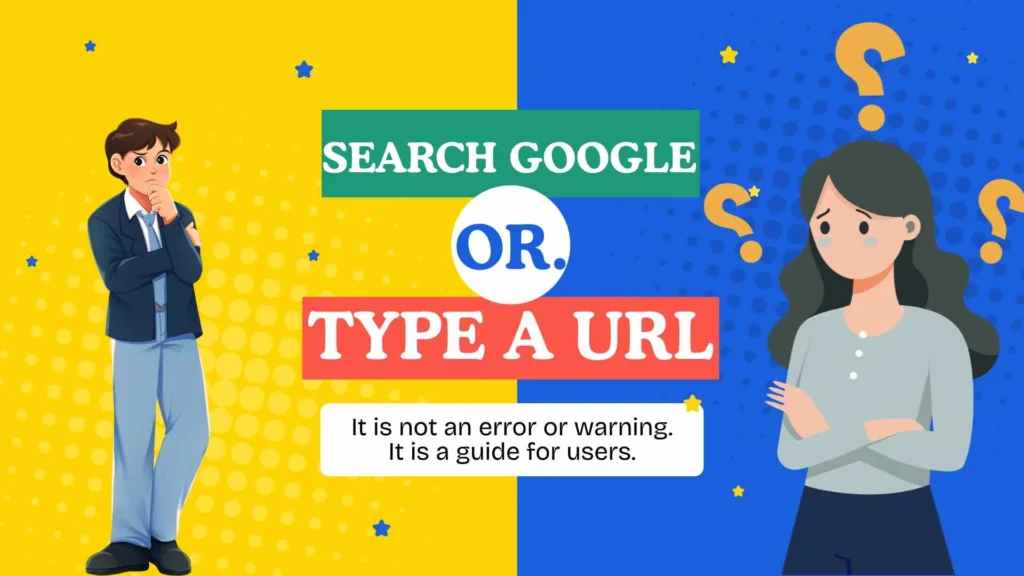
Search google or type a url means you can either search for information using Google or directly enter a website address in the browser bar.
Examples:
- Typing “weather today” searches Google
- Typing “facebook.com” opens the website directly
- Typing “news” shows search results
- Typing “youtube.com” opens YouTube
It is not an error or warning. It is a guide for users.
The Origin of Search Google or Type a URL
This phrase comes from modern web browsers. It started when browsers combined the search bar and address bar into one box.
Earlier, browsers had two boxes. One for search. One for URLs.
Now, both work together.
The wording exists to guide beginners. It explains two actions in one line.
Spelling differences exist because “URL” is a technical term. Some write it as “url” in lowercase for design and simplicity.
British English vs American English Spelling
There is no major spelling difference for this phrase. The difference is in style, not meaning.
| Version | Usage Style | Example |
| American English | Simple and lowercase | search google or type a url |
| British English | May use capital letters | Search Google or Type a URL |
Both are correct. Browsers prefer lowercase for clean design.
Which Spelling Should You Use?
Your choice depends on your audience.
- US audience: Lowercase is common and natural
- UK or Commonwealth: Capitalized form looks formal
- Global audience: Lowercase works best and feels modern
Common Mistakes with Search Google or Type a URL
Many users make small mistakes with this phrase.
- Thinking it is an error message
- Trying to click on the text itself
- Typing full sentences instead of keywords
- Adding spaces in URLs
- Writing “search on google” instead of “search google”
Correct understanding saves time and effort.
Search Google or Type a URL in Everyday Examples
You see this phrase used everywhere.
- Emails: Open browser, search google or type a url
- News: Guides for beginners mention it
- Social Media: Tech tips explain it
- Formal Writing: Used in manuals and help guides
It is common, simple, and user-friendly.
Search Google or Type a URL | Google Trends & Usage Data
This phrase is popular worldwide.
- High searches in the US, India, UK, and Pakistan
- Common among new internet users
- Often searched with words like meaning, fix, and error
It is used more for learning than troubleshooting.
Keyword Variations Comparison Table
| Variation | Meaning | Use Case |
| search google or type a url | Main phrase | Browser guidance |
| search or type web address | Similar meaning | Help articles |
| type a url | Direct action | Advanced users |
| google search bar | Related term | Tutorials |
FAQs
What does search google or type a url mean?
It tells you to either search for something or enter a website address.
Is it an error message?
No, it is only a helpful instruction.
Should I type full sentences there?
You can, but short keywords work better.
Is the URL always written in capital letters?
Both URL and url are correct.
Why do browsers show this text?
To guide users on what to do in the address bar.
Can I remove this text?
No, it disappears when you start typing.
Conclusion
The phrase search google or type a url is simple, helpful, and often misunderstood. It is not a warning or problem. It is a clear guide that tells users how to use the browser bar. You can either search for information or go directly to a website.
Understanding this phrase helps beginners feel confident online. It also improves browsing speed and accuracy. For writers, bloggers, and teachers, using this phrase correctly makes content easier to understand.
Always choose the spelling based on your audience. Keep it simple and clear. When users understand this phrase, they navigate the internet with less confusion and more confidence.

Michael Reed is a passionate language enthusiast who has spent over a decade exploring the nuances of English grammar. Writing has always been his way of sharing knowledge, simplifying complex rules, and helping readers express themselves clearly. He believes that good grammar is the bridge between ideas and understanding, making communication powerful and precise. When he isn’t writing, Michael enjoys reading classic literature, experimenting with creative writing, and mentoring young writers. His goal is to make grammar accessible, enjoyable, and practical for everyone. Michael’s dedication to language learning has inspired thousands to embrace the beauty of words every day.
Books by Michael Reed:
-
Mastering Grammar Made Simple
-
The Essential Guide to English Writing