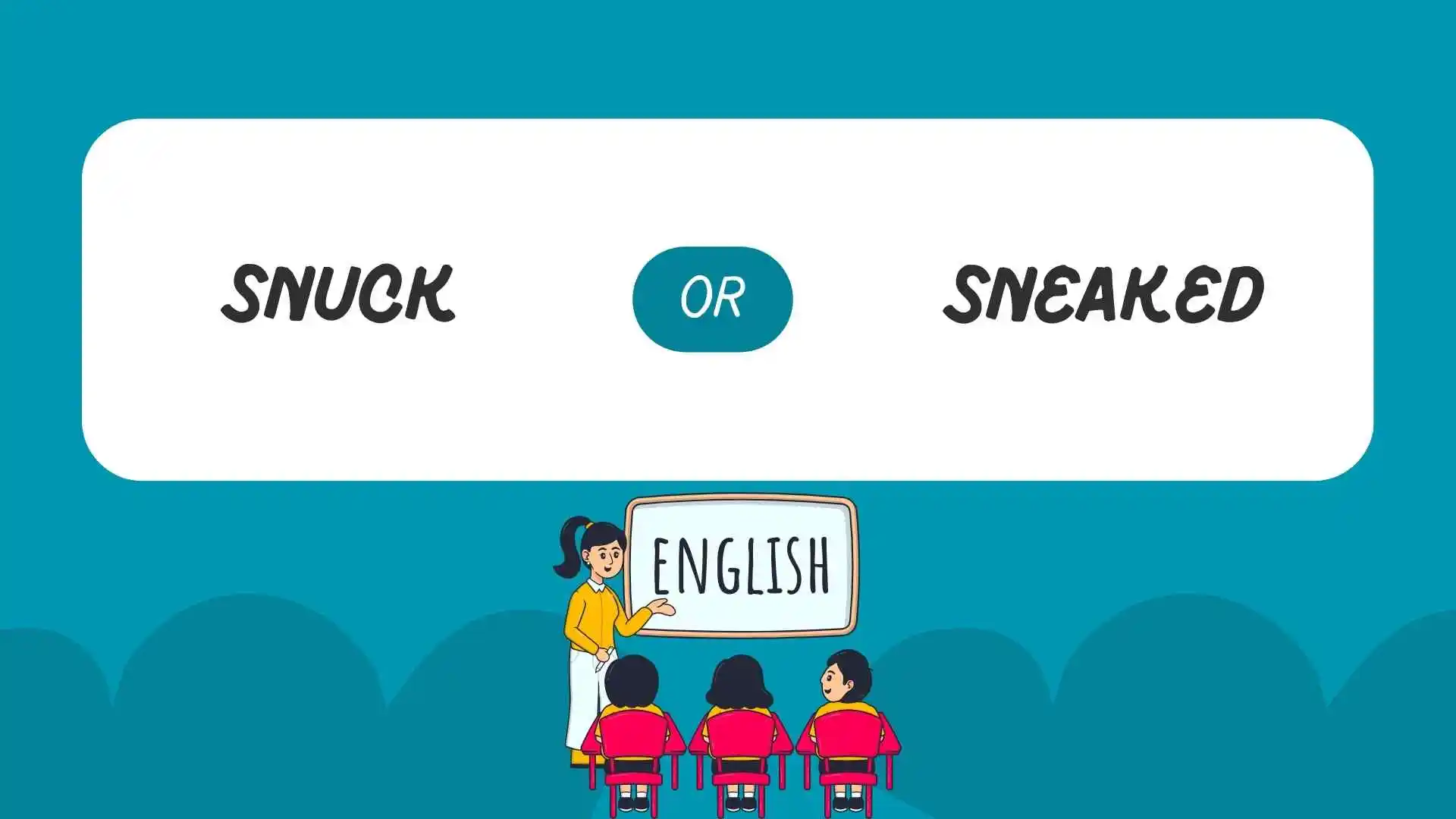
Snuck or sneaked is a common question for English learners and even native speakers. Many people wonder which form is correct when using the past tense of “sneak.” The truth is, both forms exist, but one is traditionally preferred in formal writing.
In this article, we’ll break down the meanings of snuck and sneaked, explain why they’re often confused, give examples, share tips to remember the difference, and highlight related phrases and common misspellings.
Which One Is Correct – Snuck or Sneaked?
The correct traditional form is sneaked.
Snuck is widely used in informal English, especially in American speech, but it is considered nonstandard by many grammar guides. Sneaked follows the regular past tense pattern (adding “-ed”) and is accepted in all forms of writing.
For example:
- Correct: She sneaked out of the house.
- Informal but common: She snuck out of the house.
While both are understood, use sneaked in formal writing to stay safe. Snuck works for casual conversation and storytelling.
Meaning of “Sneaked”
Sneaked is the past tense of “sneak,” which means to move quietly or secretly to avoid being noticed.
- Definition: To go somewhere stealthily or secretly.
- Simple Explanation: You sneak when you don’t want others to see you.
Example Sentences:
- He sneaked into the room without anyone noticing.
- The cat sneaked past the sleeping dog.
- I sneaked a peek at the surprise gift.
- They sneaked out of the party early.
- She sneaked a cookie from the jar.
Meaning of “Snuck”
Snuck is an informal past tense of “sneak.” It carries the same meaning as sneaked, but it is considered slang or nonstandard by traditional grammar guides.
- Definition: Informal past tense of sneak, meaning to move quietly.
- When it is used: Casual conversations, modern American English, stories, and informal writing.
Example Sentences:
- He snuck into the theater without a ticket.
- The kids snuck out of the house last night.
- I snuck a look at the answers.
- She snuck past security at the concert.
- They snuck away from the meeting early.
Why Do People Confuse Sneaked and Snuck?
Several reasons make sneaked and snuck confusing:
- Spelling Similarity: Both words are close in appearance, so typos can happen.
- Pronunciation: They sound similar, which can lead to mixing them up.
- Common Typing Mistakes: People often type “snuck” because it feels easier or sounds more natural in speech.
Although snuck has become popular, remember that sneaked is still the standard for formal contexts.
Just Snuck – Is It Correct?
Many people ask if just snuck is acceptable.
- In informal speech, yes, it’s fine: “I just snuck in.”
- In formal writing, use just sneaked: “I just sneaked into the meeting unnoticed.”
Avoid using snuck in essays, business emails, or academic papers. Stick to sneaked to sound professional.
Easy Trick to Remember the Difference
A simple memory tip:
- Think sneak → sneaked as the “proper” version.
- Snuck is informal, often used in storytelling or casual conversations.
Practical Example:
- Formal: He sneaked out quietly.
- Informal: He snuck out quietly.
When in doubt, default to sneaked.
Related Phrases with “Sneak”
Here are some common phrases using sneak and their examples:
- In no case: Never do something secretly.
- “In no case should you sneak into someone else’s office.”
- “In no case should you sneak into someone else’s office.”
- In any case: Emphasizing a situation, not the action itself.
- “In any case, I sneaked a glance at the document.”
- “In any case, I sneaked a glance at the document.”
- In that case: Showing a condition or consequence.
- “In that case, we sneaked past the guards carefully.”
- “In that case, we sneaked past the guards carefully.”
Common Misspellings
| Correct | Incorrect |
| sneaked | snaked |
| separate | seperate |
| definitely | definately |
| accommodate | acomodate |
| occurred | occured |
| until | untill |
| privilege | privelege |
| necessary | neccessary |
| receive | recieve |
| judgment | judgement |
| restaurant | resturant |
| maintenance | maintainance |
| mischievous | mischievious |
| beginning | begining |
| argument | arguement |
Frequently Asked Questions
Is snuck ever correct?
Yes, snuck is correct in informal English but not preferred in formal writing.
Is it one word or two?
It is one word. You should write snuck or sneaked, never split it.
Can I use it in formal writing?
Use sneaked in formal writing. Snuck is casual and better for speech or informal texts.
What does it mean?
Both words mean moving quietly or secretly to avoid being noticed.
Why do people prefer snuck in conversation?
It’s shorter, sounds natural, and has become common in American English speech.
Conclusion
The past tense of “sneak” is formally sneaked, while snuck works informally. Understanding the difference helps you write correctly, speak clearly, and avoid confusion. Stick to sneaked for professional writing, and enjoy using snuck in casual conversations. Remember these tips, and you’ll never mix them up again.

Andrew Wilson is a passionate writer and grammar enthusiast who has spent over a decade exploring the nuances of the English language. From dissecting sentence structures to understanding the evolution of words, he loves making grammar simple and enjoyable for everyone.
Writing has always been his way of connecting ideas, inspiring learners, and sharing the beauty of language. When he’s not teaching or writing, Andrew enjoys reading classic literature and experimenting with creative writing exercises. His mission is to help people communicate more effectively while having fun with grammar.
Books by Andrew Wilson:
-
Mastering English Grammar: A Complete Guide
-
The Joy of Words: Exploring Language with Fun