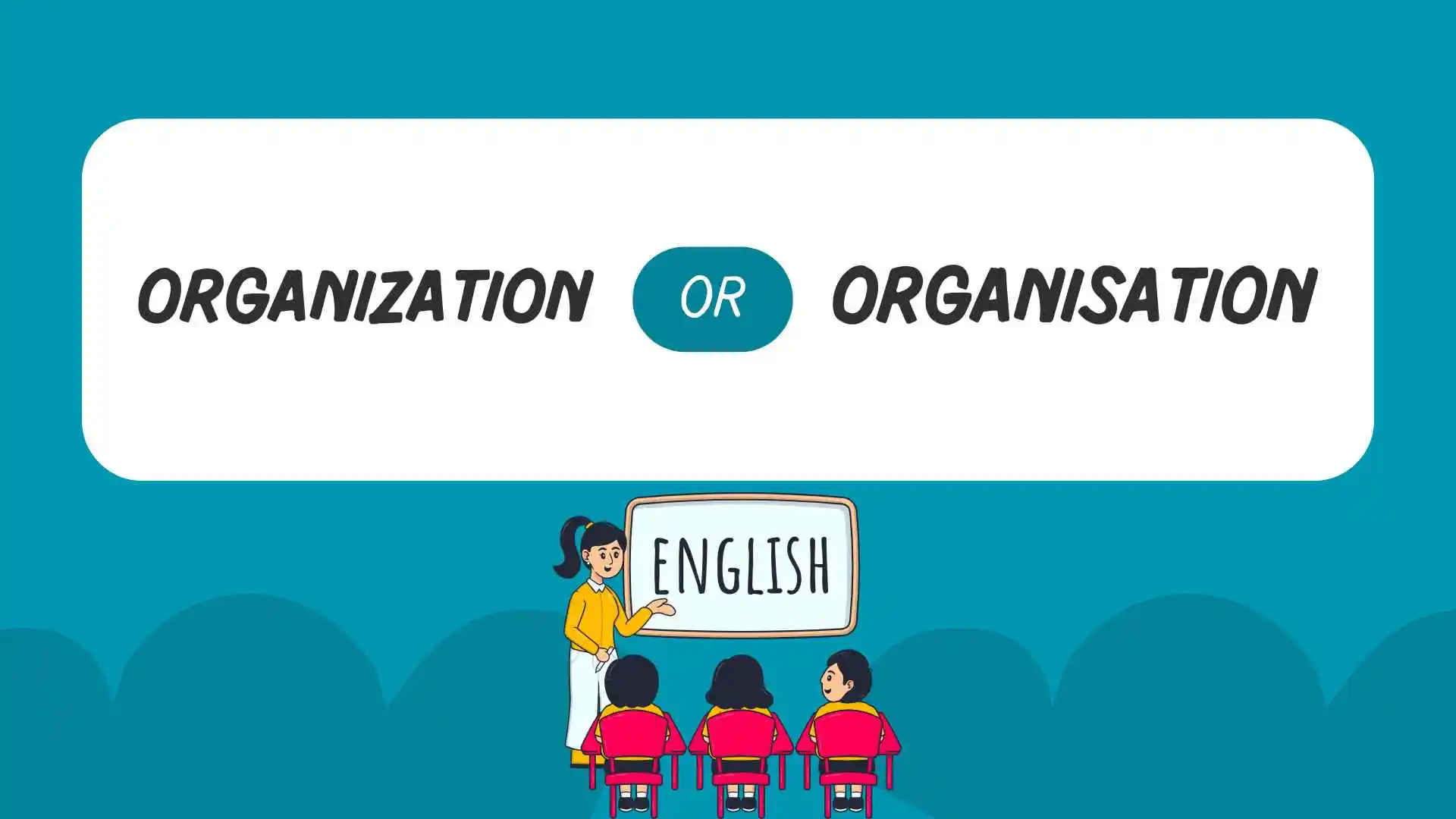
Organization or organisation which spelling is actually correct? If you have ever paused while writing this word, you are not alone.
Many English learners, students, bloggers, and even professionals get confused between these two spellings. The good news is that both forms are correct, but they are used in different regions of the world.
In this guide, you will learn the difference between organization and organisation, their meanings, examples, common mistakes, memory tricks, related phrases, and frequently asked questions. By the end, you will know exactly which spelling to use in any situation.
Which One Is Correct – Organization or Organisation?
The short answer is: both spellings are correct.
However, the correct version depends on the type of English you are using:
- Organization is the preferred spelling in American English.
- Organisation is the preferred spelling in British English and many Commonwealth countries.
Example:
- American English:
“She works for a large international organization.” - British English:
“He joined a charitable organisation last year.”
So, neither spelling is wrong. The difference is mainly regional.
Why Does This Happen?
English developed differently in different countries over time. American English often prefers -ize endings, while British English sometimes prefers -ise endings.
That is why you also see words like:
- Realize / Realise
- Organize / Organise
- Recognize / Recognise
Even though both spellings are accepted in many dictionaries, style guides usually recommend choosing one version and using it consistently.
Meaning of “Organization”
Organization refers to a group of people working together for a shared purpose. It can also mean the process of arranging things in an orderly way.
Simple Definition
An organization is:
- A company
- A business
- A charity
- A club
- A government body
- Any structured group with goals
It can also describe good planning or arrangement.
Example Sentences
- The healthcare organization helps poor families.
- Our school created a student organization for environmental awareness.
- Good organization saves time and reduces stress.
- She works for a nonprofit organization in New York.
- The event was successful because of excellent organization.
Different Types of Organizations
There are many kinds of organizations, including:
Business Organizations
Companies that sell products or services.
Nonprofit Organizations
Groups that work for social causes instead of profit.
Government Organizations
Departments and agencies run by governments.
Educational Organizations
Schools, colleges, and training institutions.
International Organizations
Groups that operate globally, such as humanitarian agencies.
Why the Word Matters
The word “organization” is widely used in:
- Business writing
- Academic writing
- Legal documents
- Websites
- Job applications
- Marketing
Using the correct spelling helps your writing look professional and polished.
Meaning of “Organisation”
Organisation has exactly the same meaning as “organization.” The only difference is the spelling style.
Where It Is Used
This spelling is common in:
- The United Kingdom
- Australia
- New Zealand
- South Africa
- India
- Other Commonwealth countries
Example Sentences
- The charity organisation raised funds for children.
- He volunteers for an environmental organisation.
- Proper organisation improves productivity.
- Their organisation supports local communities.
- The sports organisation announced new rules.
Is One More Formal Than the Other?
No. Both spellings are equally formal and correct.
The key is consistency:
- Use organization if writing in American English.
- Use organisation if writing in British English.
Switching between both spellings in the same article can confuse readers.
Why Do People Confuse Organization and Organisation?
Many people mix up these spellings for several reasons.
1. Spelling Similarity
The two words look almost identical. The only difference is:
- z in organization
- s in organisation
Because the change is so small, writers often forget which version they intended to use.
2. Similar Pronunciation
Both words are pronounced almost the same way:
or-guh-nuh-ZAY-shun
Since the pronunciation barely changes, people rely on memory rather than sound.
3. Influence of Different English Styles
The internet exposes people to both American and British English every day.
For example:
- You may read American blogs using “organization.”
- Then watch British news using “organisation.”
This constant exposure creates confusion.
4. Auto-Correct and Spellcheck
Some devices use American English by default. Others use British English settings.
As a result:
- Your phone may correct “organisation” to “organization.”
- Or the opposite may happen.
5. Typing Habits
Writers often type quickly and forget which regional style they started with.
Consistency matters, especially in professional writing.
Just Organization or Organisation – Is It Correct?
Yes, using either word alone is perfectly correct.
However, confusion usually happens in phrases and titles.
Correct Usage Examples
- Business organization
- Nonprofit organization
- International organisation
- Student organisation
Common Mistakes
Mixing Both Styles
Incorrect:
“Our organisation is a global organization.”
Correct:
“Our organisation is a global organisation.”
or
“Our organization is a global organization.”
Formal Writing Tip
Always follow the style guide required by:
- Your school
- Employer
- Publisher
- Client
Consistency improves readability and professionalism.
Easy Trick to Remember the Difference
Here is a simple memory trick:
Think About the Country
“Z” for the USA
The United States strongly prefers:
- organization
- organize
So remember:
Z = American English
“S” for British Style
British English often uses:
- organisation
- organise
So remember:
S = British Style
Quick Memory Sentence
“Americans love the letter Z.”
This trick helps many writers instantly remember the difference.
Related Phrases with “Organization”
Understanding common phrases helps you use the word naturally.
Business Organization
A company or structured business group.
Example:
The business organization expanded internationally.
Nonprofit Organization
A group that works for social causes instead of profit.
Example:
She donates money to a nonprofit organization.
International Organization
A group operating across multiple countries.
Example:
The international organization provides disaster relief.
Organizational Skills
The ability to plan and arrange tasks efficiently.
Example:
Strong organizational skills are important in leadership roles.
Organization Chart
A diagram showing roles within a company.
Example:
The manager updated the organization chart.
In Any Organization
This phrase means “within any structured group.”
Example:
Communication is important in any organization.
In That Organization
Refers to a specific company or group.
Example:
He worked in that organization for ten years.
Case-by-Case Organization
Used when tasks are arranged individually.
Example:
Files were handled through case-by-case organization.
Common Misspellings of Organization and Other Grammar Words
| Correct | Incorrect |
| Organization | Organisation (in American English) |
| Organisation | Organization (in British-only writing) |
| Separate | Seperate |
| Definitely | Definately |
| Accommodation | Accomodation |
| Necessary | Neccessary |
| Occurred | Occured |
| Government | Goverment |
| Receive | Recieve |
| Successful | Succesful |
| Environment | Enviroment |
| Maintenance | Maintainance |
| Beginning | Begining |
| Calendar | Calender |
| Embarrass | Embarass |
Important Note
Some “incorrect” spellings above may only be incorrect depending on the English style you are using.
For example:
- “Organisation” is correct in British English.
- “Organization” is correct in American English.
Always match the spelling style to your audience.
Organization vs Organisation in American and British English
This is one of the most searched grammar questions online.
Here is a quick comparison:
| Feature | Organization | Organisation |
| English Style | American English | British English |
| Preferred In | USA | UK, Australia, India |
| Meaning | Same | Same |
| Pronunciation | Same | Same |
| Formal Usage | Yes | Yes |
Which Is More Popular Globally?
Today, organization is slightly more common online because American English dominates much of the internet.
However, organisation remains widely accepted and commonly used worldwide.
Should You Use Organization or Organisation for SEO?
If you are writing online content, SEO matters.
Choose Based on Your Audience
Use “Organization” If:
- Your audience is mainly American
- Your website targets US traffic
- You follow AP Style
Use “Organisation” If:
- Your audience is British or international
- Your readers use Commonwealth English
- Your publication follows UK style rules
Can You Use Both?
You can mention both spellings once for clarity. However, avoid mixing them throughout the article.
Search engines prefer consistency.
Common Grammar Rules Related to Organization
Understanding related grammar rules can help you avoid mistakes.
Singular and Plural Forms
Singular
- organization
- organisation
Plural
- organizations
- organisations
Examples
- The organization is growing quickly.
- Several organizations attended the meeting.
Is “Organization” a Noun?
Yes, it is a noun.
It names:
- A group
- A system
- A structure
- An arrangement process
Adjective Form
The adjective form is:
- organizational
- organisational
Examples
- She has strong organizational skills.
- The company made organisational changes.
Verb Form
The verb form is:
- organize
- organise
Examples
- Please organize the files.
- We need to organise the event.
Examples of Organization in Daily Life
The word appears in many everyday situations.
At School
Student organizations help learners join activities and clubs.
At Work
Companies depend on good organization to improve productivity.
At Home
Home organization makes spaces cleaner and easier to manage.
In Events
Successful events require careful organization and planning.
In Government
Government organizations manage public services and laws.
Why Correct Spelling Matters
Spelling affects:
- Credibility
- Professionalism
- SEO
- Reader trust
Incorrect or inconsistent spelling can make writing appear careless.
For Students
Correct spelling improves grades and clarity.
For Businesses
Professional spelling strengthens brand reputation.
For Bloggers
Consistent spelling improves user experience and search engine optimization.
Frequently Asked Questions
Is “organisation” ever correct?
Yes. “Organisation” is completely correct in British English and Commonwealth countries.
Is “organization” wrong in the UK?
Not always. Some British publishers also accept “organization,” although “organisation” is traditionally preferred.
Which spelling should I use in formal writing?
Use the spelling style required by your audience, employer, or style guide. Stay consistent throughout the document.
Is it one word or two?
Both “organization” and “organisation” are single words.
Do both words mean the same thing?
Yes. They have identical meanings. Only the spelling differs.
Which spelling is better for SEO?
Choose the version your audience searches for most often. American audiences usually search “organization,” while British audiences often search “organisation.”
Final Thoughts on Organization vs Organisation
The debate between organization and organisation is not about right versus wrong. Both spellings are correct and widely accepted.
The main difference is regional usage:
- Organization is standard in American English.
- Organisation is standard in British English.
The most important rule is consistency. Once you choose one style, use it throughout your writing.
Whether you are writing a blog post, school assignment, business email, or website content, using the correct spelling helps your work appear clear, professional, and trustworthy.
So next time you hesitate between these two spellings, simply think about your audience and choose the version that matches their English style.

Hi, I’m Robert Hayes, a lifelong word enthusiast and grammar geek. Ever since I can remember, I’ve been fascinated by the way words shape our thoughts and communication. Over the years, I’ve dedicated myself to exploring English grammar in depth, helping readers understand it in simple, practical ways. When I’m not editing or writing, you can find me buried in a classic novel or experimenting with creative writing exercises. My goal is to make grammar approachable, fun, and empowering for everyone. Sharing my knowledge has been a passion, and I love seeing others improve their writing one sentence at a time.
Books by Robert Hayes:
-
Mastering English Grammar: A Practical Guide
-
The Writer’s Toolbox: Grammar and Style Essentials