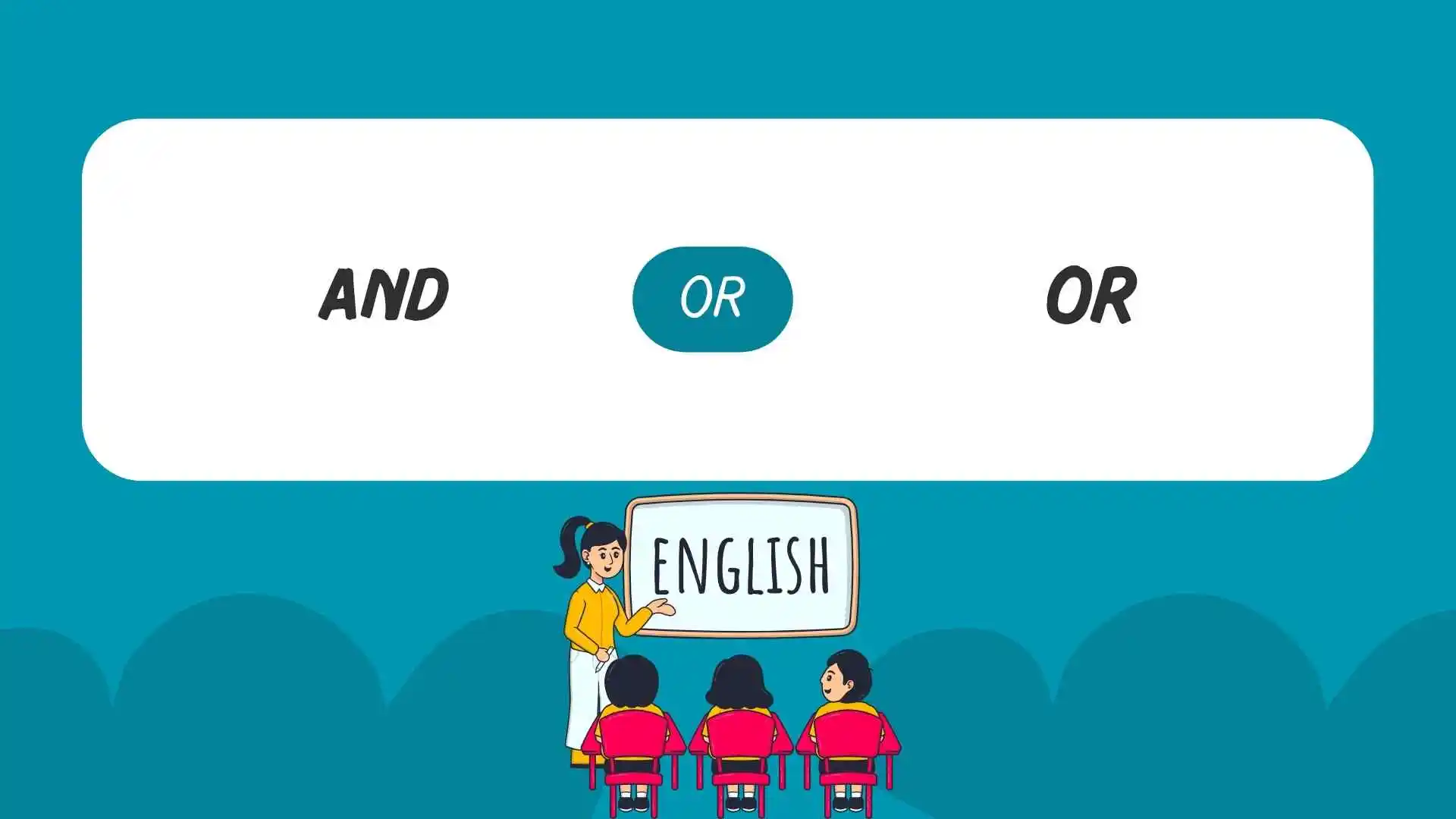
And/or is a punctuation term people often see in writing, forms, and legal text. It is used to show that one option, the other option, or both options are possible.
Many people get confused about whether to write it as “and/or” or “and or,” but only one form is correct in formal writing.
In this article, you will learn the correct usage, meaning, common mistakes, and easy tricks to remember it.
Which One Is Correct – And/Or vs And Or?
The correct form is “and/or”.
The form “and or” (without the slash) is usually incorrect in formal writing because it does not clearly show the combined meaning.
Why “and/or” is correct:
- It clearly shows three possibilities:
- A only
- B only
- Both A and B
- It is widely accepted in legal, academic, and formal writing
- It removes confusion in instructions and conditions
Why “and or” is wrong:
- It looks grammatically incomplete
- It does not clearly express combined choice
- It is rarely used in professional writing
👉 So, always use and/or when you want to show multiple possibilities.
Meaning of “And/Or”
And/or is a conjunction used to show that one or more conditions may apply.
Simple Definition:
It means “one, the other, or both”.
Easy Explanation:
We use and/or when we are not limiting the choice to just one option. It allows flexibility.
Examples:
- You can bring tea and/or coffee to the meeting.
- Students can submit homework online and/or in printed form.
- The job requires experience in marketing and/or sales.
- You may choose to study at home and/or in the library.
- The package includes a phone case and/or screen protector.
Meaning of “And Or” (Incorrect Form)
The phrase “and or” without a slash is not a standard grammatical form in English.
Definition:
It is an incorrect attempt to combine two conjunctions.
When People Mistakenly Use It:
- In casual writing or texting
- When they forget punctuation rules
- When they avoid using slashes
Examples of incorrect usage:
- You can choose tea and or coffee ❌
- Bring your books and or notebooks ❌
- You may attend online and or offline ❌
Correct version:
- You can choose tea and/or coffee ✔
- Bring your books and/or notebooks ✔
👉 Always remember: without the slash, the meaning becomes unclear.
Why Do People Confuse And/Or and And Or?
People often mix these two because they look and sound similar.
1. Spelling Similarity
Both phrases contain the words “and” and “or,” which makes them easy to confuse.
2. Writing Habits
In fast typing or casual chatting, people skip punctuation like “/”.
3. Lack of Grammar Awareness
Many learners are not taught that and/or is a special legal and formal expression.
4. Informal Internet Usage
On social media, people often ignore grammar rules, which spreads incorrect forms.
5. Visual Confusion
The slash (/) makes “and/or” look unusual for beginners.
Just And/Or – Is It Correct?
Yes, “and/or” alone is correct and widely accepted.
However, it is important to use it in the right context.
When it is correct:
- Legal documents
- Forms and applications
- Instructions
- Business writing
- Academic writing
When to avoid it:
- Informal conversation
- Creative storytelling (sometimes it feels too formal)
- Repeated overuse in one paragraph
Example sentences:
- Applicants must have a degree and/or relevant experience.
- The system accepts debit and/or credit cards.
- You can contact us by phone and/or email.
👉 In simple writing, sometimes it is better to rewrite the sentence instead of using and/or too often.
Easy Trick to Remember the Difference
Here is a simple memory trick:
👉 Think of “and/or” = AND + OR together = BOTH POSSIBLE
Simple rule:
- If you mean “this, that, or both” → use and/or
- If you write “and or” → it is wrong
Quick shortcut:
Slash = Choice flexibility
So:
- ✔ and/or = correct
- ❌ and or = incorrect
Related Phrases with “And/Or”
Let’s understand how and/or connects with common English condition phrases.
1. In any case
Meaning: no matter what happens
Example:
- In any case, you can use email and/or phone for support.
2. In no case
Meaning: absolutely not allowed
Example:
- In no case should you share passwords and/or personal data.
3. In that case
Meaning: depending on the situation
Example:
- In that case, you may choose online and/or offline learning.
👉 These phrases help show conditions, just like and/or shows options.
Common Misspellings
| Correct Word | Incorrect Form |
| and/or | and or |
| definitely | definately |
| separate | seperate |
| receive | recieve |
| because | becuase |
| necessary | neccessary |
| accommodate | accomodate |
| occurrence | occurance |
| tomorrow | tommorow |
| believe | beleive |
| really | realy |
| until | untill |
| judgment | judgement |
| pronunciation | pronounciation |
| privilege | priviledge |
👉 These are common grammar mistakes that often appear with “and/or” confusion in writing.
Frequently Asked Questions
1. Is “and or” ever correct?
No, “and or” is not correct in formal English. The correct form is and/or.
2. Is and/or one word or two words?
It is written as two words connected by a slash (and/or).
3. Can I use and/or in formal writing?
Yes, it is widely used in legal, academic, and business writing.
4. What does and/or mean?
It means one option, the other option, or both options together.
5. Is and/or still used in modern English?
Yes, it is still common, especially in official documents and instructions.
6. Can I replace and/or with “or”?
Sometimes yes, but “or” does not always show the possibility of both options.
Conclusion
Understanding and/or is important for clear and accurate English writing.
The correct form is always and/or, not “and or,” especially in formal communication.
It helps express multiple possibilities in a simple way, making instructions and statements more flexible.
By remembering the simple rule “slash means choice,” you can easily avoid mistakes and improve your grammar accuracy.

Michael Reed is a passionate language enthusiast who has spent over a decade exploring the nuances of English grammar. Writing has always been his way of sharing knowledge, simplifying complex rules, and helping readers express themselves clearly. He believes that good grammar is the bridge between ideas and understanding, making communication powerful and precise. When he isn’t writing, Michael enjoys reading classic literature, experimenting with creative writing, and mentoring young writers. His goal is to make grammar accessible, enjoyable, and practical for everyone. Michael’s dedication to language learning has inspired thousands to embrace the beauty of words every day.
Books by Michael Reed:
-
Mastering Grammar Made Simple
-
The Essential Guide to English Writing